
Candidates who arrive with Warehouse Worker training and certificate credentials tend to clear screenings faster, handle equipment safely, and move into shifts without long shadowing.
Immediate-start posts still train, although validated proof of competence removes friction and builds trust. Free and low-cost courses can cover the essentials while issuing basic certificates that recruiters can verify.
Hiring managers screen for safe equipment handling, hazard awareness, and clean incident reporting. Forklifts, conveyors, and mezzanines concentrate risk, so practical training beats vague claims on a resume.
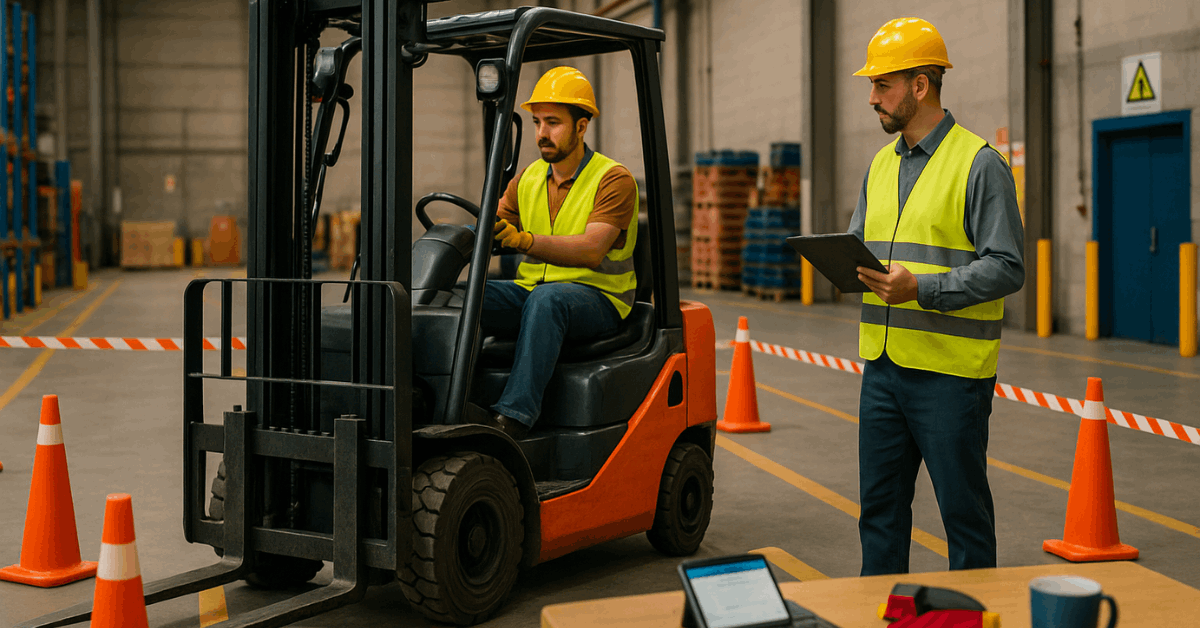
How Free Programs Lead to Faster Offers
In entry-level warehouses, certifications act as shorthand for safety culture and coachability.
Basic forklift awareness, hazard communication training, and lockout tagout training show readiness to follow procedures on day one.
First aid and fire response certificates demonstrate calm execution during incidents rather than guesswork. Recruiters often use certificates to triage high-volume applicants, which turns pre-hire training into a practical advantage.
Essential Courses for Warehouse Worker Training and Certificate
Complete baseline safety modules first, then add role-specific options tied to your target posting.
The subtopics below mirror the real hazards and tasks inside modern facilities while mapping to recognizable standards and practices.
Machine Safety and Usage
Operations depend on powered equipment for lifting, stacking, and transport. Training should cover risk assessment, safe start-up and shutdown, spotter communication, and daily inspections.
Certificates that include practical checklists and maintenance basics help supervisors trust early assignments on busy lines.
Maintain Stock Handling and Storage Areas
A clean, organized stockroom prevents product damage and pest risks while lowering trip hazards.
Training should emphasize waste removal routines, temperature and humidity control for sensitive goods, and hazard reporting channels. Certificates for housekeeping and storage best practices signal reliability during high-volume shifts.
Compliance: Regulations and Standards
Every site operates under national rules and company policies. Awareness training should explain why labeling, signage, safety data sheets, and equipment isolation rules exist, not only what to click in an LMS.
Programs aligned to OSHA Hazard Communication and regional equivalents improve audit readiness.
Working at Heights
Multi-tier racking and pick modules create predictable fall exposures.
Training must explain equipment selection, inspection, anchor points, and rescue planning, plus ladder rules that seem simple yet cause many injuries. UK-style guidance clarifies practical controls and language that transfer globally.
Forklift Safety
Only trained and evaluated operators should drive powered industrial trucks, and refresher training is required when conditions or performance change.
A certificate that references the powered industrial truck standard strengthens applications for putaway, replen, and loading roles.
Accept Stock Delivery
Receipts control shrink and support accurate replenishment.
Training should cover quantity verification, damage checks, ASN matching, exception recording, and safe unload methods. Certificates that include documentation practice reduce onboarding time at inbound docks.
Replenish Stock Levels
Out-of-stocks break pick paths and delay carriers. Training should teach rotation, bin presentation, shelf labeling, basic demand cues, and shrink tracking.
A short competency certificate shows supervisors that fast-moving SKUs will not be left empty between cycles.
Document and Report Incidents
Accurate, timely reports prevent repeats. Training must cover witness statements, photo evidence, near-miss logging, and escalation routes, plus privacy and retaliation protections.
Certificates tied to incident documentation reassure managers during audits and claim reviews.
Lockout/Tagout Procedures
When servicing equipment, hazardous energy must be controlled, verified, and documented.
Awareness-level certificates should explain roles, steps, and verification before work begins, with emphasis on electrical, mechanical, hydraulic, pneumatic, and gravity energy sources.
Occupational Health and Safety Regulations
Introductory OHS training explains employer and worker duties, PPE selection, walking-working surface expectations, and inspection habits.
Certificates referencing recognized frameworks such as ISO 45001 and national standards show willingness to work within structured systems.
Priority Safety Topics for Team Huddles
Short, recurring huddles lock in safe habits and keep teams aligned during peak volume.
A two-minute refresher before shift handoff often eliminates the day’s biggest risks. Rotate the following topics to maintain attention and coverage without meeting fatigue.
- Correct use of personal protective equipment and fit checks for gloves, eyewear, and footwear.
- Storage and handling rules for hazardous materials, including access to safety data sheets.
- Forklift and pallet jack pre-operation checks and pedestrian-equipment separation.
- Fire extinguisher access, inspection basics, and alarm and evacuation routes.
- Traffic flow, mirrors, and horn points at intersections, blind corners, and dock doors.

Get Hired Fast for Immediate Start Roles
Applications that include relevant certificates reach the top of recruiter shortlists in high-volume warehouses.
Aim for an applicant profile that pairs free warehouse safety training with a clear shift availability statement, contactable references, and a mobile number that supports same-day calls.
Staffing agencies and on-site vendors often hire for multiple facilities, so one application can unlock several leads at once. Target local postings on major boards, then follow up in person at agencies that advertise same-week starts.
Minimum Qualifications and Daily Work Reality
Entry-level roles usually ask for consistent attendance, basic English or local language comprehension, and the ability to lift, push, and pull within defined limits.
Background checks and pre-employment drug screens may apply, and basic computer skills help when scanning, counting, or closing tasks in an inventory system.
Typical days include receiving, binning, replenishment, picking, packing, value-add services, and staging for carriers, all while following safety prompts and housekeeping rules that keep aisles, stairs, and platforms in safe condition.
Where to Find Immediate Hiring Near You
A consistent search rhythm fills interviews quickly. Combine these channels to surface fresh roles and same-week starts.
- Major job boards using geo-tagged searches such as “warehouse jobs immediate start” plus your city.
- Staffing agencies that specialize in logistics and distribution across multiple client sites.
- Company career pages for regional fulfillment centers and parcel carriers.
- Local community groups and workforce centers that post high-turnover shifts and open interviews.
Free Certificates Recruiters Recognize
For forklifts and other powered industrial trucks, employers must train and certify operators, then evaluate performance and provide refresher training when triggered; awareness certificates strengthen applications for roles that interact with PIT traffic even when driving is not assigned.
For HAZCOM, employers must ensure labeling, accessible safety data sheets, and employee information and training, so chemical handling awareness certificates remain useful across sites. Walking-working surface rules and working-at-height guidance inform ladder use, guardrails, and fall protection planning, so short courses that reference those expectations keep teams safer on multi-level racks.
Fire safety training that covers extinguisher basics and evacuation complements first aid and CPR certificates, which support OSHA’s requirement for ready medical services or adequately trained personnel.
Final Takeaway
In competitive hubs, a Warehouse Worker training and certificate stack turns interest into job offers without delays.
Complete the essentials, attach downloadable certificates, and keep a short list of agencies and employers ready for same-day calls.
Consistent safety practices protect teammates, build trust with supervisors, and make immediate-start roles sustainable rather than short-lived.