
In most shops, Working as a Mechanic means diagnosing faults accurately, executing repairs safely, and documenting work precisely so vehicles leave in roadworthy condition.
Modern drivetrains, electrics, and software raise the bar, therefore training must be continuous and aligned to real workshop standards.
Entry-friendly programs now make foundational learning accessible, while recognized credentials still anchor employability and pay growth. Careful selection of free courses, certificates, and on-the-job practice builds a credible start without heavy tuition.
What the Role Involves
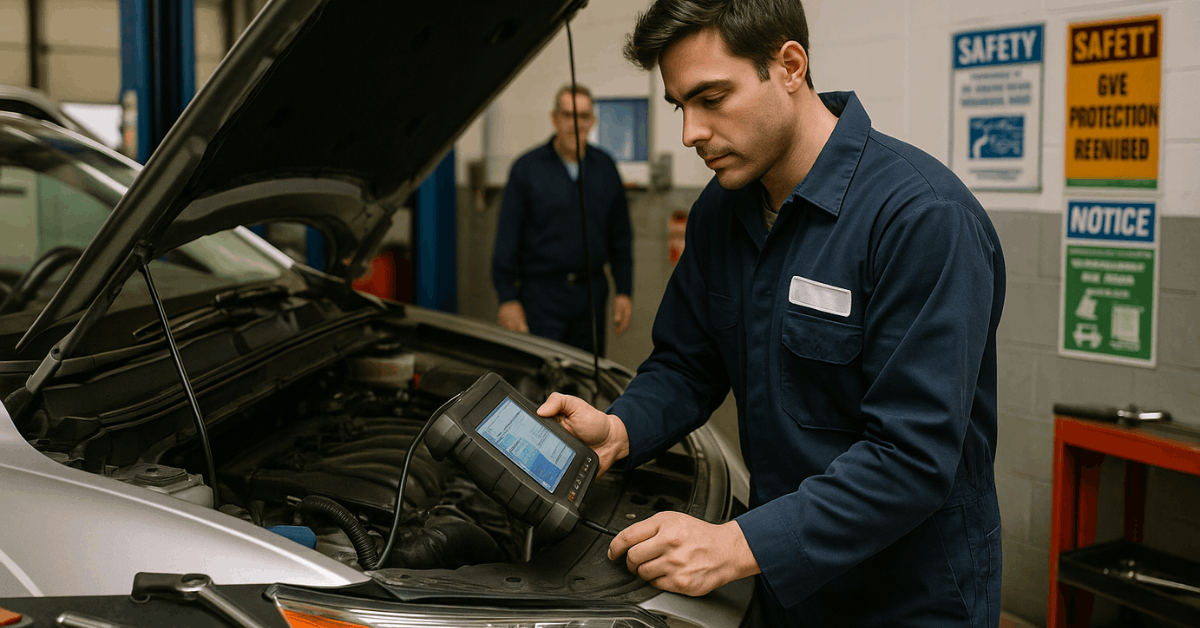
Daily work spans inspection, diagnosis, repair, and maintenance across mechanical, electrical, and hydraulic systems using scan tools and manual checks. Tasks include oil services, tire rotations, brake servicing, belt and hose replacements, battery testing, and deeper operations such as transmission or engine work when required.
Clear communication matters, since customers need issues explained, estimates prepared, timelines set, and post-repair guidance delivered in plain language.
Accurate recordkeeping closes the loop, since build sheets, torque specs, parts numbers, and safety checks must be traceable for liability and quality control.
Core Skills and Workshop Conditions
Strong problem solving drives accurate diagnostics under time pressure, while attention to detail prevents comebacks that damage trust.
Physical stamina supports awkward positions, long standing periods, and occasional heavy lifting in warm, noisy, or cramped bays. Tool control, torque discipline, and safe lifting habits protect both the vehicle and the technician.
Continuous learning is non-negotiable, since late-model vehicles integrate driver-assistance, complex CAN networks, and high-voltage systems that require current procedures and verified data.
Free Basic Course and Certification Options for Workshops
Choosing training that maps cleanly to shop tasks accelerates ramp-up, keeps safety front and center, and produces documentation managers can file during audits or insurer reviews.
Several reputable platforms offer free modules, structured programs, or printable certificates to prove completion.
A blended plan works best, pairing OEM or industry content for accuracy, then general platforms to fill gaps or reinforce theory.
OEM and Industry Sources
DENSO Technic offers free registration, self-paced modules on components and systems, and platform-issued certificates suitable for personnel files, making it a strong choice for parts-specific upskilling in workshops.
ASE Introduction to Automobile Service (IAS) provides an online entry program covering core service tasks and a quiz across four modules, oriented to prospective or entry-level staff who need a structured start aligned to U.S. shop realities.
Open Learning Platforms
Alison, Car Mechanic Training delivers a beginner pathway across components, maintenance, and basic diagnostics, free to study, with an optional CPD-accredited certificate available for a fee that employers can verify.
Cursa hosts free classes such as Fundamentals of Automotive Engineering and issues a free digital certificate, helpful for documenting baseline theory before hands-on practice. SC Training by SafetyCulture curates mobile-friendly micro-courses and advertises free courses with certificates, which suits teams standardizing short, safety-critical refreshers across shifts.
Udemy, Automotive Electrical Systems and Components Technology provides free video lessons introducing ignition, starter, alternator, sensors, and actuators, useful as a primer before deeper diagnostics.
EV-Focused Starter
Great Learning, Introduction to Electric Vehicles grants a free certificate on completion and covers EV components, batteries, and charging, giving shops an accessible on-ramp to high-voltage basics.
Quick Comparison of Popular Free Sources
In one view, compare costs, certificate availability, and ideal use cases to choose efficiently.
| Provider | Cost to Study | Certificate | Best Use Case |
| DENSO Technic | Free after signup | Yes, platform certificate | OEM-grade component knowledge for staff files |
| ASE IAS | Free access program | Completion recognition varies by program | Structured U.S. entry tasks overview |
| Alison | Free learning, paid cert | CPD-accredited certificate for purchase | Beginner theory and resume signal |
| Cursa | Free | Free digital certificate | Fast theory plus proof of completion |
| Great Learning | Free after signup | Free certificate | EV fundamentals for shop transition |
Pathways to Recognized Credentials
Shops hiring entry-level staff benefit when learners progress toward national or industry credentials that customers and insurers recognize.
Two widely referenced paths include ASE in the United States and TESDA in the Philippines, each mapping training to assessed competence and workplace safety.
ASE Route, United States
ASE sets standards for program accreditation and technician certifications, covering core automotive areas that employers understand and value.
Candidates typically study, log experience, pass proctored exams, and maintain certifications on a schedule defined by ASE governance.
ASE publishes current program standards for accredited schools and offers IAS as an onboarding resource, giving trainees a consistent skills baseline before moving toward full certification exams.
Safety, Documentation, and Shop Readiness
Workshop safety relies on hazard recognition, lockout rules, lifting techniques, fire precautions, and chemical handling basics that appear across many micro-courses.
Mobile micro-learning through platforms that issue completion certificates simplifies compliance checks during audits or insurer reviews, especially for seasonal staff or new apprentices.
Free certificate libraries help supervisors verify completion dates, course names, and learner identities in a single portal that supports exportable reports.
Day-to-Day Responsibilities To Expect
Service intake typically starts with the complaint, previous work history, and a brief road test when safe.
A structured inspection follows, covering DTC scans, visual checks, fluid conditions, and wear items that commonly trigger noise, vibration, or performance complaints.
Approved estimates convert into work orders that list torque specs, part numbers, and line items, after which a final quality check validates roadworthiness and eliminates repeat visits. Good shops reinforce customer guidance on maintenance intervals, safe use, and scheduling for upcoming service windows.
Starter Roadmap for Absolute Beginners
In five steps, build baseline competence through free courses, supervised practice, and recognized credentials.
- Enroll in a beginner car maintenance course on Alison or Coursera, then complete the module quizzes carefully to lock in fundamentals.
- Add one electrical primer on Udemy, then practice test-light and multimeter basics under supervision.
- Register at DENSO Technic for system-specific learning, then print certificates for workshop files.
- Take an EV fundamentals class at Great Learning to cover safe handling concepts for hybrids and EVs.
- Target ASE entry-level certificate programs through schools or employer partners when based in the United States.
Pay, Progression, and Employability Signals
Certificates from recognized bodies, clean repair records, and positive customer feedback drive advancement into diagnostic roles or team leadership.
Shops value cross-training on brakes, steering, suspension, HVAC, and electrical diagnosis, since coverage flexibility trims backlogs and improves first-time fix rates.
EV literacy increasingly separates applicants, since safe isolation, battery awareness, and tool selection prevent injuries and component damage. Documented micro-courses, OEM modules, and national qualifications together demonstrate a professional mechanic roadmap that hiring managers respect.
Course Selection Tips for Workshops
Training time is scarce, so prioritize content that improves common repairs, reduces comebacks, and closes safety gaps.
Pick automotive online courses that issue verifiable certificates, store completion data, and reflect current technology.
Maintain an internal list of required modules, such as workshop safety training, torque methods, high-voltage awareness, and scan-tool workflows. Track costs carefully, but keep one paid seat for advanced cases when free content cannot reach the required depth.
Conclusion
Strong shops reward verified skills, clean safety habits, and consistent repair quality.
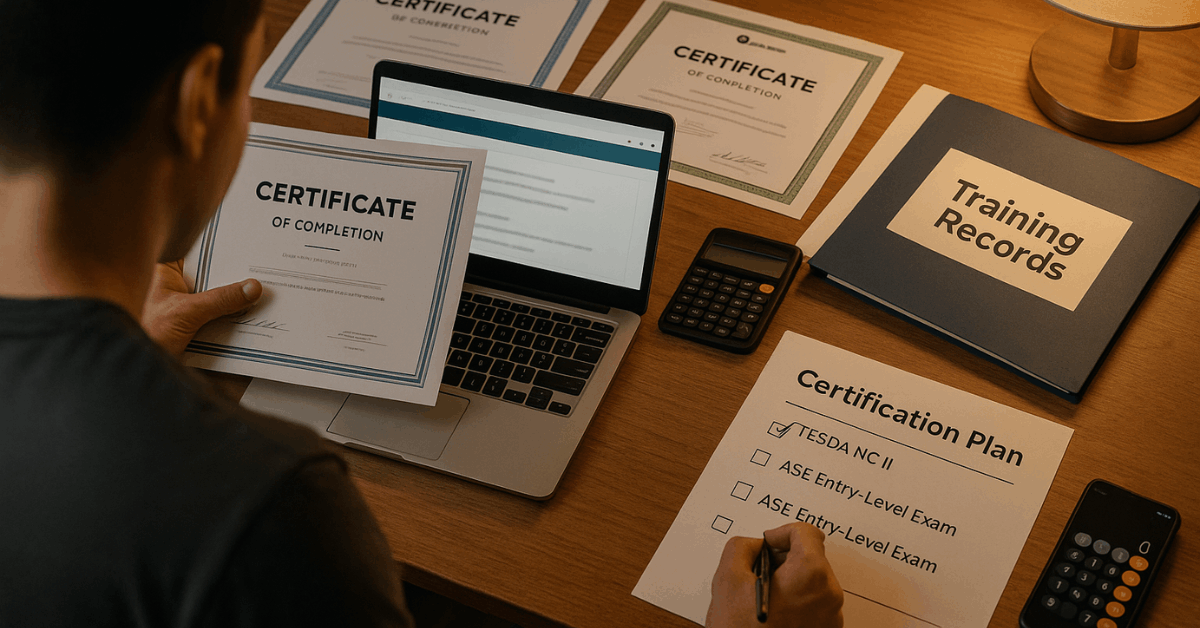
Your next move should be simple and measurable: finish one free course, print the certificate, and log the task in your training record.
Then map a path to ASE or TESDA, add an EV fundamentals module, and apply each lesson to supervised jobs.
Within a few months, your documented progress, safer workflow, and broader system knowledge will translate into better assignments, steadier pay, and real workshop credibility.