
Hotels run on a simple promise: arrivals feel smooth, rooms feel ready, problems get handled fast. Hotel Industry Roles exist to keep that promise consistent, even on busy days with late flights, early checkouts, and full occupancy.
According to the World Travel & Tourism Council (WTTC), travel and tourism contributed about US$10.9 trillion to global GDP in 2024, so these roles sit inside an economic machine that never fully slows down.
Front desk work stays visible and guest-facing, while housekeeping work stays operational and quality-driven. Both roles shape guest satisfaction in different ways, and both rely on tight coordination to avoid delays, complaints, and revenue loss.
Hotel Industry Roles Inside A Typical Property
A hotel’s structure usually splits into guest-facing teams and back-of-house teams, even though the lines blur during peak hours. The Front Office Department handles arrivals, departures, payment touchpoints, and the constant stream of questions that come with travel.
The Housekeeping Department protects standards for cleanliness, sanitation, and room presentation, while also keeping public spaces guest-ready. Larger properties also run several departments that indirectly support both teams.
Food and beverage, security and maintenance, human resources, sales and marketing, and finance all affect day-to-day operations, staffing coverage, and service consistency. Operational success tends to come from alignment, not hierarchy.
Front Desk Duties and Responsibilities
Front desk work feels like the control center for guest flow. Mistakes often show up immediately, since guests tend to escalate concerns to the desk first, even when another department owns the fix.
Guest Interaction and Arrival Control
Greeting guests, verifying identity, and handling check-in and check-out stays are central.
The desk also manages queues, balances speed with accuracy, and sets tone through etiquette and professionalism. Requests land here first, including room moves, late checkout, accessibility needs, and service recovery after a complaint.
Reservations, Billing, and Revenue Details
Room sales begin with booking controls, rate updates, and accurate guest profiles. Payment processing, deposits, refunds, and invoice corrections fall under the desk workflow in many hotels. Errors create charge disputes later, so attention to detail matters more than a friendly script.
Communication Hub and Room Coordination
Calls, emails, internal notes, and task routing often run through the desk. Room readiness depends on consistent communication with housekeeping, especially during high turnover days. A clean room that is not properly released in the system can sit empty while a tired guest waits in the lobby.
Concierge, Bell, and Support Roles
Concierge services can include transport arrangements, local recommendations, dining reservations, and ticket help.
Bell desk, porter, and doorman functions may sit under the same umbrella in some properties, especially smaller hotels. Luggage handling, taxi coordination, and guest direction support the arrival experience even when a dedicated concierge team is not present.
Night Audit and Overnight Controls
Overnight shifts often combine guest service with basic accounting checks. night auditor duties usually include balancing room revenue, verifying postings, resolving mismatches, and preparing reports for management review. Guest issues still happen overnight, so calm escalation skills matter.
Housekeeping Duties and Responsibilities
Housekeeping protects the “product” guests actually buy: a clean, comfortable, well-presented room. Standards are visible, but the work behind them is rarely seen, which can make the role feel underestimated.
Guest Room Maintenance and Turnover
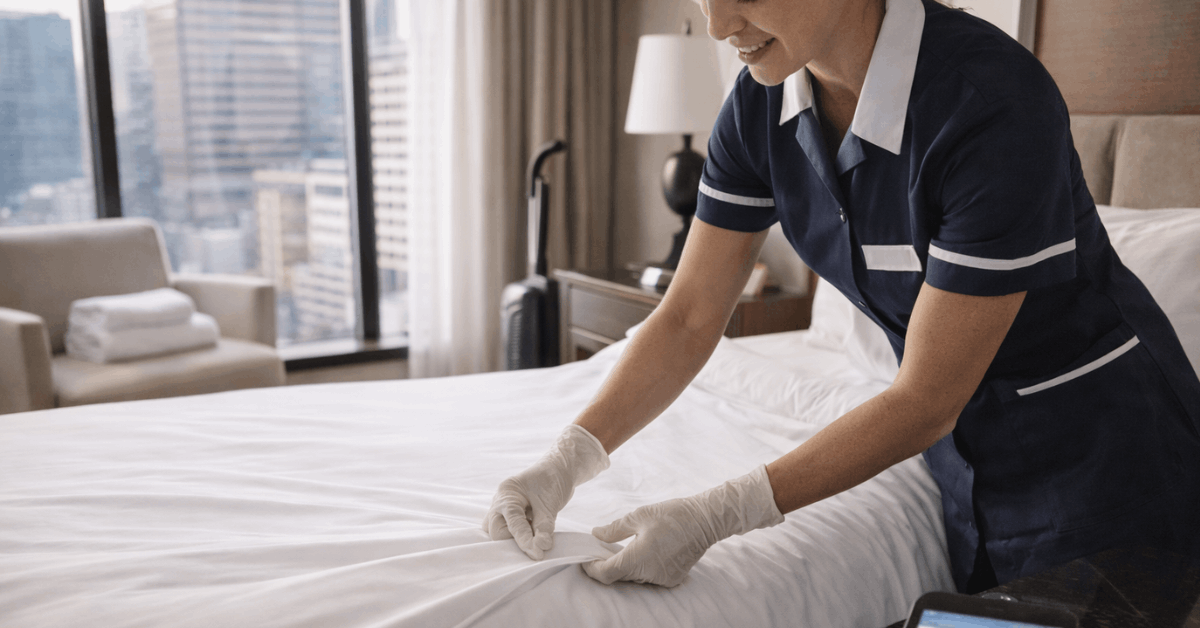
Room attendants clean stayover rooms and full checkout rooms, change linens, make beds, restock toiletries, and reset the space to brand standards. Sanitation and cross-contamination prevention are part of daily work, especially around bathrooms and high-touch surfaces.
Speed matters, though quality failures cost more through complaints, refunds, and negative reviews.
Public Spaces and Shared Areas
Public area maintenance covers lobbies, hallways, elevators, stairwells, staff corridors, and public restrooms. These areas shape first impressions, even when the guest never notices the staff member who kept the space presentable. High-traffic zones often need repeated passes during the day.
Room Status and System Updates
Room readiness only helps the operation when the status is updated accurately. room status updates tell the desk which rooms can be sold, which rooms need inspection, and which rooms must be held due to issues.
A single wrong status can trigger a chain of problems, including double assignments or a guest sent to an unready room.
Supplies, Linen, and Inventory Control
Inventory control includes tracking amenities, cleaning chemicals, linens, and equipment condition.
Shortages create service gaps quickly, so planning around occupancy and seasonality matters. Many hotels also separate laundry functions into a dedicated team, while others keep it within housekeeping.
Guest Belongings and Property Protection
Lost and found procedures protect both guests and staff. Items left behind get logged, secured, and handled through a consistent process, usually with supervisors involved. Privacy and integrity matter, since mishandling creates reputational and legal risk.
Where Front Desk and Housekeeping Connect
Coordination between these teams decides whether arrivals stay smooth or chaotic. Many guest frustrations stem from handoff failures rather than bad intent.
- Arrival and departure lists get shared early, so room turnover can be prioritized for incoming guests.
- Guest requests like extra towels, pillows, baby cots, or spill cleanups typically route from the desk to housekeeping.
- Maintenance issues often start with housekeeping discovery, then get escalated to engineering while the desk blocks the room from being sold.
- VIP arrivals, special requests, and room moves require synchronized notes so promises made at the desk match the room setup.
- Service recovery works best when both teams share a clear timeline and avoid passing blame across departments.

Other Core Hotel Departments That Support Both Teams
Many hotel problems look like “front desk issues” or “housekeeping issues” on the surface, yet the root cause can sit elsewhere.
Food and Beverage Department
Food and beverage handles dining service, kitchen production, safety standards, and guest-facing restaurant operations. Room service logistics also affect housekeeping workload through tray removal and corridor cleanliness.
Security and Maintenance Department
Security supports safety, access control, incident response, and loss prevention. Maintenance keeps rooms sellable by fixing plumbing, HVAC, lighting, internet systems, and furniture issues that housekeeping reports.
Human Resources Department
HR handles recruitment, onboarding, training, and retention. Staffing stability matters heavily for front office and housekeeping because both roles have high operational pressure and frequent turnover in some markets.
Sales and Marketing Department
Sales drives bookings through contracts, group business, and promotions, while marketing builds demand and manages brand perception. Forecast accuracy affects staffing schedules, room blocks, and turnover pacing.
Finance Department
Finance tracks revenue, reconciles payments, manages budgets, and prepares audit support. Clean coordination between finance and front office reduces posting errors, disputes, and end-of-month cleanup work.
Choosing Between Front Desk and Housekeeping As A Career Path
Career fit depends on energy, preferences, and what feels satisfying day after day. Front desk roles reward communication, multitasking, and comfort with constant guest interaction.
Housekeeping roles reward consistency, speed paired with precision, and pride in standards that guests feel immediately.
Progression Paths Exist in Both
Front desk can move toward guest relations, supervisory roles, revenue support, reservations leadership, and front office management. Housekeeping can move toward floor supervision, quality control, executive housekeeping leadership, training roles, and operations coordination.
Internships and structured training programs help across departments, since hotels tend to promote people who already understand cross-team dependencies. Strong performance usually looks similar in both areas: reliability, attention to detail, and clear communication under pressure.
Last Thoughts
Hotel Industry Roles keep the guest promise intact when occupancy spikes and plans change fast. Front desk and housekeeping succeed most when communication stays tight, room status stays accurate, and handoffs happen early rather than at the last minute.
Career choice comes down to where energy fits best: guest-facing flow control at the desk, or standard-driven execution behind the scenes. Either path builds transferable skills in service recovery, operational discipline, and teamwork that hotels rely on every day.