
Warehouse Operations live or die on two steps that rarely look glamorous: sorting and packing. Order accuracy, shipping speed, and damage rates tend to trace back to how those steps run on a normal day, not a perfect day.
Research commonly cited in warehouse leadership circles puts picking and packing at up to 70% of warehouse costs, so small workflow changes can move real money.
Sorting decides where inventory goes next, while packing decides how safely and consistently it leaves. Most modern improvements aim at the same outcome: fewer touches, fewer exceptions, and cleaner data at every scan point.
Sorting Tasks That Keep Inventory Flow Predictable
Sorting sounds simple until volume spikes, SKUs multiply, and multiple carriers share the same dock.
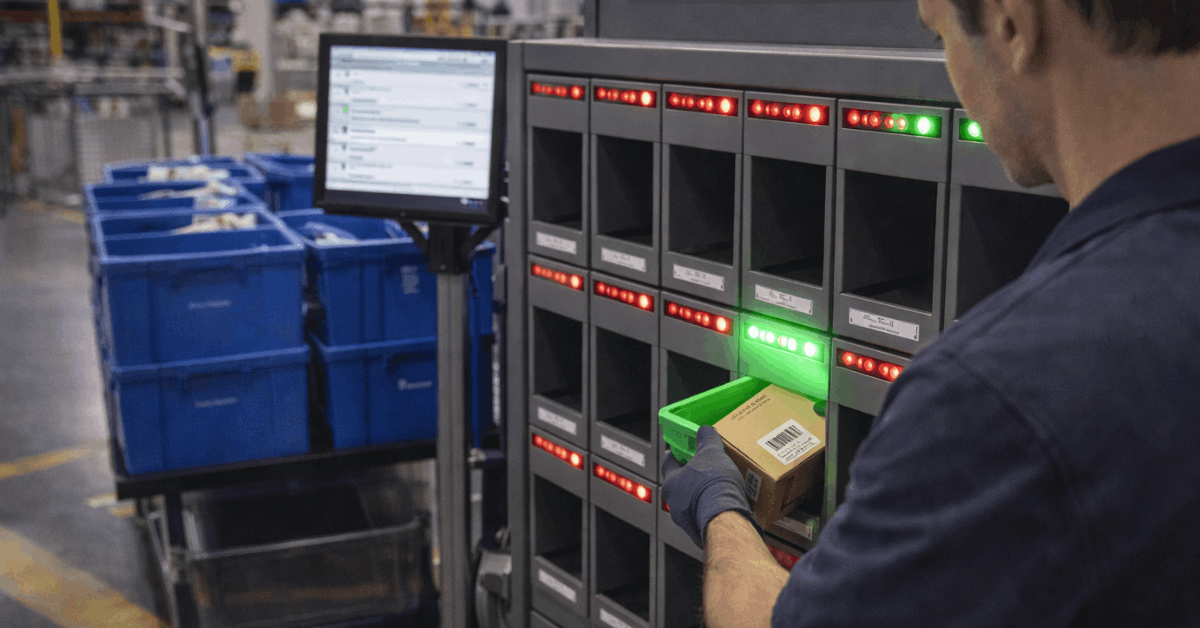
Good sortation keeps travel time down and prevents the “chase the problem” cycle that drains labor. Errors at this stage ripple forward into late departures, misroutes, and painful rework.
Inbound Sorting
Inbound sorting organizes received inventory, so put-away stays fast and accurate. Pallets, totes, or cartons get separated by product type, storage zone, temperature requirement, or handling class. That early structure reduces time lost later when pickers hunt across multiple locations.
Order Consolidation
Order consolidation groups pick items into complete customer orders before packing begins.
Multi-line orders, split picks, and multi-zone picking all lean on consolidation to prevent missing items and double shipments. A put-away system often supports this step by assigning each order a cubby, then routing items into the correct slot until the order is complete.
Outbound Sorting
Outbound sorting routes packed cartons into lanes that match carrier, service level, route, or destination region. Outbound sorting becomes critical in multi-carrier operations, since mislabeled or mis-laned parcels create last-minute dock chaos and missed cutoffs.
Packing Tasks That Protect Speed and Accuracy
Packing quality shows up in customer reviews as fast as it shows up in claims and returns.
High-performing packing focuses on verification, the right materials, and consistent labeling. Even small choices, like box size and dunnage, can reduce damage while keeping shipping costs under control.
Verification and Exception Handling
Verification confirms the right item and quantity before sealing the carton.
Barcode and RFID scanning support this stage by matching each scanned item to the order record, reducing mis-picks and wrong-SKU shipments. Exceptions need a clear path, since a messy exception process often creates hidden backlogs near the pack line.
Cartonization and Materials
Cartonization means selecting a carton and protective materials that fit the product and the shipping method.
Right-sizing packaging reduces void fill, lowers dimensional weight exposure, and cuts material waste. Algorithms can recommend carton size, but real-world pack lines still need clear rules for fragile items, liquids, and mixed-material orders.
Labeling and Traceability
Labeling connects the physical carton to the digital shipment record. Print-and-apply automation helps at high volume, yet accuracy still depends on clean master data and correct scan discipline.
SKU identifiers, tracking numbers, and carrier labels must match the order record without manual retyping.
Technology That Tightens Sorting and Packing
A practical automation strategy often starts in software, then adds mechanization to remove the most walking, lifting, and rework. Most teams see early wins by improving visibility, standardizing scan points, and reducing travel time.
Warehouse Management System
Warehouse management system (WMS) platforms coordinate work across receiving, storage, picking, consolidation, packing, and shipping. Real-time tasking also supports batch and wave picking, which reduces travel by clustering similar work.
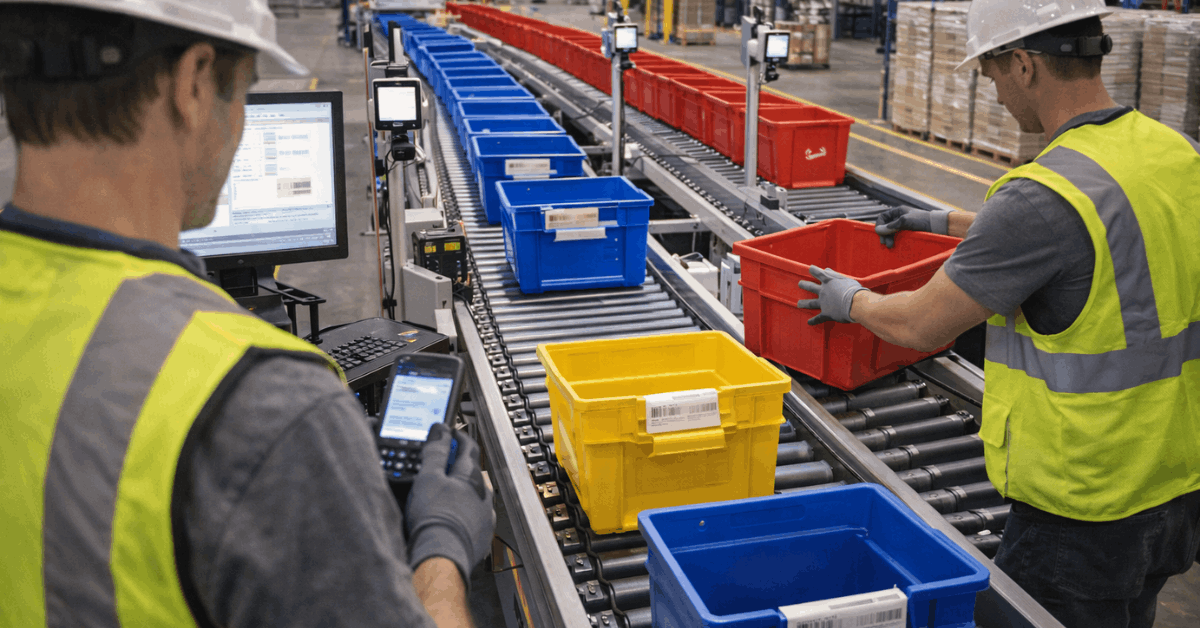
Conveyors, sorters, and sensors reduce manual lane decisions at scale, especially during outbound peaks. Automated sortation systems read barcodes or RFID data and divert parcels to the correct chute or lane with less human handling.
Mobile Robots
Mobile robots also change how inventory moves between zones. autonomous mobile robots (AMRs) navigate dynamically using sensors and maps, which makes them more flexible in busy warehouses than fixed-path vehicles.
Goods-to-person approaches matter for high-volume e-commerce. When designed well, goods-to-person systems can double or triple picking speed by reducing walking time and aisle congestion.
KPIs That Reveal Real Performance
Metrics keep improvement efforts honest. Speed alone can hide damage, while accuracy alone can hide labor waste. A small KPI set usually works better than a dashboard that nobody trusts.
| KPI | What It Measures | Why It Matters |
| Order Accuracy Rate | Correct items shipped per total orders | Protects customer trust and reduces reships |
| Order Cycle Time | Time from order release to shipment | Signals bottlenecks across pick, sort, and pack |
| Packing Speed | Orders packed per hour per station | Tracks capacity and staffing efficiency |
| Cost Per Shipment | Labor + materials per parcel | Shows margin pressure and waste |
| Damage Or Return Rate | Claims and returns tied to fulfillment | Connects packing quality to customer impact |
Japan Snapshot: Precision, Space, and Continuous Improvement
Warehouse operations in Japan often reflect two constraints: limited urban space and persistent labor shortages. That mix pushes high-density layouts, higher automation, and disciplined process habits, especially in major metro corridors.
Kaizen Culture
Kaizen culture supports continuous improvement through small, repeatable changes, often paired with 5S discipline to keep workstations consistent and materials easy to reach. The approach fits packing well, since tiny motion savings repeated thousands of times can lower fatigue and stabilize throughput.
Packing quality expectations also run high. Traditional tsutsumu influences a “high-care” mindset, especially for gift-like presentation and damage prevention.
Sustainability pressure shows up too, including Japan’s certification rules for PET beverage bottles that include at least 15% recycled content for eligible products starting in January 2026.
When Automation Pays Off and What To Automate First
Automation works best when it targets a proven bottleneck and keeps exception paths clear. Value tends to come from fewer touches, fewer errors, and better consistency during peak seasons. High upfront costs still matter, so staged rollouts usually beat big-bang transformations.
- Start with Data Capture: Standardize scan points in receiving, pick, and pack to reduce manual entry.
- Add WMS-Driven Tasking: Use directed work, wave planning, and slotting rules to cut travel.
- Mechanize High-Volume Moves: Add conveyors or basic sortation where carts and walking dominate time.
- Introduce Mobile Robotics: Use AMRs for repetitive zone-to-zone transport and replenishment loops.
- Automate Packaging Decisions: Apply cartonization logic and right-sizing rules once item data is reliable.
Unplanned downtime costs also influence the automation case. IoT Analytics reports median unplanned downtime costs exceeding $100,000 per hour in industrial contexts, which pushes many operators toward predictive maintenance planning for automated equipment.
Common Failure Points and Practical Fixes
Label and master-data issues cause more damage than most teams expect. A clean SKU catalog, correct dimensions, and consistent location naming prevent “bad data” from spreading into cartonization and routing logic. Tight change control helps too, since fast SKU expansion can quietly break scan rules.
Workstation design can also hold performance back. Pack lines run smoother when materials sit within easy reach, replenishment stays predictable, and exception bins never block primary flow.
Ergonomics count, since fatigue increases mislabels and missed verification scans.
Investment planning needs realism. Market forecasts for warehouse automation growth sit in the high teens to low twenties CAGR range in many reports, which signals momentum, but not effortless implementation. A staged plan, clear KPIs, and disciplined scan habits still decide whether technology pays back.
Last Thoughts
Sorting and packing look basic, yet they decide how reliable the whole warehouse feels under pressure. Tight sortation keeps inventory moving to the right place with fewer surprises, while disciplined packing protects accuracy, cost control, and customer trust at the doorstep.
Tech helps most when it removes repeatable waste, strengthens scan discipline, and keeps exception paths clean, rather than chasing flashy automation.
Strong teams treat these steps as the operating system of fulfillment: measure them with a small KPI set, improve them in small cycles, and the gains show up fast in speed, damage rates, and margin.